80g tax exemption: Tax Benefits Deduction under 80g

80g tax exemption: Tax Benefits Deduction under 80g

Why 80G Tax Exemption Matters

Millions of Indians every year look for ways to save smart on tax. The 80g tax exemption enables you save for your cash donations while donating it for social cause.

When you donated to ISKCON Delhi, you feed hungry and orphan children. And, you get a legal tax deduction under 80g.

Here is a truth: 80G = Tax savings + Social impact.

What is 80G in Income Tax?

Section 80g of income tax act which gives an option to individual donors who donate money or other personal property to registered trust or societies. This tax benefit under section 80g will lower your taxable income which means less tax.

ISKCON Delhi 80g registration income tax is lifetime (Ref. No. आ. नि. (छू.) मु. न. /80-जी/1667/2007/2008-2009). Tax credits are available for donations each year.

How You Save Tax with 80G

Here is a simple example of 80g tax benefit:

  • Your annual income: ₹10 lakh
  • That’s you donate ₹50,000 to ISKCON Delhi
  • You can also claim ₹25,000/- (50%) for deduction under 80g of income tax act.
  • Now you have a taxable income of ₹9.75 lakh
  • You pay less tax

You’re investing for good reasons and your money can save as well.

Who Can Claim 80G Deductions?

Almost everyone who files taxes:

  • Salaried individuals
  • Self-employed professionals
  • Companies and partnerships
  • Trusts and HUFs

You need to donate through the traceable mode of payment like cheque, bank transfer, and UPI. Cash donations above ₹2,000 do not qualify.

ISKCON Delhi issue you an official receipt with PAN and registration features for your tax deduction benefits.

Types of 80G Donations

Under the Contributions Law, donations are divided into four categories:

  • 100% deduction without any limit − Prime Minister’s Relief Funds
  • 50% no limit − Drought Relief Fund
  • 100% (max 10% of income) − Research projects
  • 50% tax (10% of income) − ISKCON Delhi etc.

If you contribute ₹1 lakh to ISKCON Delhi, you would be able to seek a deduction of ₹50,000 from your gross income.

80G in the New Tax Regime

Lots of donors ask: “Is 80g applicable in new tax regime?

Here’s the answer:

  • Old tax regime: Full 80g deduction in new tax regime
  • New tax system: Not much is deductible by default

If you wish to avail 80g tax benefit then you can switch back to old regime. If, on the other hand, you are eager to maximize your tax benefits from charity giving, the old regime could still be a good one.

Documents You Need

These are the documents you need to have with you when you apply for 80g tax exemption.

  • 80g tax exemption certificate (donation receipt from ISKCON Delhi)
  • PAN and registration number of the NGO
  • Form 16 (for employed person)
  • Proof of bank transaction (NEFT, UPI or card) or payment.

For the receipt issued by ISKCON Delhi including every pertinent detail. Keep it for eight years.

How to fill 80G in Your ITR form

If you maintain with these process instructions, it is likely that fill up 80g in income tax return:

  • Visit www.incometax.gov.in
  • Log in with your PAN
  • Select “File Income Tax Return”
  • Choose Section 80G under Deductions
  • Particulars of donation (name of donor, PAN and amount)
  • Upload receipt if needed
  • Verify and submit

This guide on how to fill donation 80g in income tax return shall help you in claiming your deduction correctly.

Pro tip: Donate and verify using the same bank account.

Common Mistakes to Avoid

Don’t lose your deduction:

  • Acceptance of over ₹2,000 in cash donation
  • Missing PAN of the charity
  • Using fake receipts
  • More than 10% of your gross adjusted income$ No cap
  • Selecting wrong deduction category

Audited Receipt of ISKCON Delhi which keeps you compliant.

Why Choose ISKCON Delhi?

ISKCON is one of the most financially transparent, effective:

  • Registered under the Indian Trusts Act. 2. 1882 with perpetual 80G status
  • Transparent operations with audited records
  • Some of the programs nationwide include Food for Life
  • Serves all facets of community
  • Trusted by thousands in India

You combine finances with people.

How ISKCON Uses Your Donations

Your contribution becomes real impact:

Program Impact
Food for Life Daily meals for underprivileged children
Disaster Relief Emergency food during calamities
Education Free spiritual and skill development
Mental Health Awareness campaigns
Cultural Preservation Temple maintenance and heritage

No single paisa comes to naught, every rupee is audited and reaches the real needy.

Real Impact Numbers

ISKCON Delhi’s work touches millions:

  • 1,000,000 meals served monthly
  • Regular food drives during emergencies
  • Thousands of volunteers across Delhi

You are investing in a society that is for everyone when you support the 80G.

The Double Benefit

Every rupee creates two returns:

  • Financial gain: More savings due to the lower taxable income.
  • Social return: Feeds the hungry, educate the children

How Much Can You Save?

One has to be aware and understand the 80g income tax exemption limit. The maximum limit for exemption of your tax under this section cannot exceed 10% as referred to:

Income Donation Eligible Deduction Tax Saved
₹10 lakh ₹50,000 ₹25,000 ₹5,000-₹7,500
₹15 lakh ₹1 lakh ₹50,000 ₹10,000-₹15,000
₹25 lakh ₹2 lakh ₹1 lakh ₹20,000-₹30,000

Meaning − Even small donations will save few bucks for you as u/s 80g of income tax act.

Online Donations Made Easy

ISKCON Delhi’s process is now totally online:

  • Acknowledgement email along with 80G detail
  • PAN and registration number included
  • Safe and secure online payments (UPI, cards, net banking)

Your proofs are still valid and verifiable.

Verify ISKCON’s Registration

Check authenticity in minutes:

  • Visit www.incometax.gov.in
  • Click “Charitable Institutions”
  • Find organization by their name/PAN Number.
  • Confirm ISKCON’s active status

This builds donor confidence.

80G vs Other Sections

  • Section 12A: Exemption of income of charitable or religious trusts.
  • 80G: The donor can make deduction under this section.
  • CSR Donations: Corporate statutory obligation.

ISKCON Delhi is 12A, as well as 80G certified. Companies may fulfil CSR and get 80G at one go.

What if You Don’t Get the 80G Certificate?

No deductions can be availed if you don’t possess a valid 80G registration.

Always verify before donating.

The registration of ISKCON Delhi is completely valid and authentic.

Top Benefits of Donating

  • Perpetual 80G registration
  • Transparent audited financials
  • Real community impact
  • Government recognition
  • Tax savings plus emotional satisfaction

Its financial prudence combined with social responsibility.

FAQs

Q: What is 80g in income tax?

A: A segment that provides deductions for gifts to eligible charitable organizations under section 80g of income tax act.

Q: Is 80g included in the new tax regime?

A: No, by default. Opt for the old regime to avail 80g deduction in new tax regime.

Q: What is 80g income tax exemption limit?

A: It is 10% of gross fund; Out of it 50% is allowable as tax deductible under section 80g.

Q: Is ISKCON Delhi 80g is registered under income tax?

A: Yes. valid under CBDT Circular No. 7/2010.

Q: Can corporations claim tax benefits under 80g?

A: Yes. Both, an individual and a company receive tax benefit under section 80g.

Conclusion: Save Tax, Serve Society

80g tax exemption divert your money for welfare.

When you donate to ISKCON Delhi, you directly support feeding the hungry and elevating the poor with 80g tax benefit.

Convert this financial year in to a golden one with the service tax deduction under 80g.

Make a Donation now and get 80G Tax Benefit.
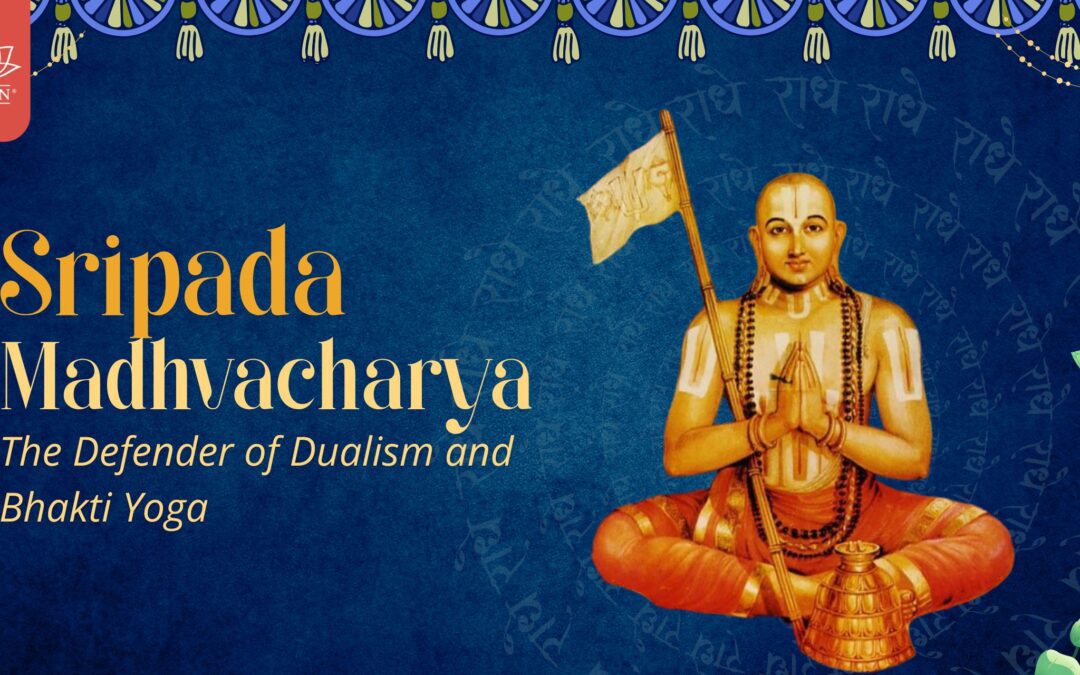
Sri Madhvacharya: The Defender of Dualism and Bhakti Yoga

Sri Madhvacharya: The Defender of Dualism and Bhakti Yoga

Introduction

Sri Madhvacharya, also known as Madhva, was a great philosopher and spiritual teacher who lived in 13th-century India. His life and teachings have had a profound impact on the world of spirituality, particularly in defending the principles of dualism and promoting the path of bhakti yoga. On his appearance day, let’s take a closer look at the fascinating life and teachings of this spiritual luminary.

The Divine Transmission

In the tradition of passing down spiritual knowledge, Lord Vishnu shared profound wisdom with four remarkable personalities: Lakshmi Devi, Lord Shiva, Sri Brahma, and the four Kumaras. These four spiritual figures, in turn, passed on this knowledge to four devoted souls, laying the foundation for four distinct lineages, or Sampradayas:

  •         Lakshmi Devi transmitted her knowledge to Ramanujacharya, forming the Sri Sampradaya.
  •         Lord Shiva imparted his wisdom to Vishnuswami, creating the Rudra Sampradaya.
  •         Sri Brahma shared his insights with Madhvacharya, establishing the Brahma Sampradaya.
  •         The four Kumaras passed on their knowledge to Nimbarka, leading to the Kumara Sampradaya.

Sri Madhvacharya: A Life of Devotion

Madhvacharya was born into a Brahmana family in the coastal town of Udupi, South India. His early life was marked by extraordinary events and displays of divine power, such as turning tamarind seeds into coins and defeating a snake demon with a touch of his toe.

His exceptional intellect and insatiable thirst for knowledge led him to embark on a spiritual journey at the age of twelve when he accepted sannyasa, a renounced way of life. Madhvacharya traveled extensively across India, seeking wisdom and mastering various fields of knowledge.

Meeting with Srila Vyasadeva

One of the significant milestones in Madhvacharya’s life was his meeting with the great sage Srila Vyasadeva at Badarikashrama, a sacred place of pilgrimage in the Himalayas. Under Srila Vyasadeva’s guidance, Madhvacharya’s scholarship and spiritual understanding reached new heights.

Return to Udupi

After his extensive travels and learning, Madhvacharya returned to Udupi, where he continued to display his divine qualities. In Udupi, an incident involving a merchant ship carrying a special cargo of gopi-candana (clay from Krishna’s Vrindavana) took place. This event revealed a Deity of Lord Krishna concealed within the clay, complete with a stick and a lump of food. Madhvacharya composed a heartfelt prayer of gratitude and established the worship of this Deity, a practice that continues to this day.

Defender of Dualism

Madhvacharya’s profound intellect and devotion to Lord Krishna made him a staunch defender of the philosophy of dualism (Dvaita). He passionately argued against the impersonalistic views of the Mayavadis, who considered God’s form as an illusion. Madhvacharya’s philosophy of shuddha-dvaita, or pure dualism, logically established that God is eternally a person and is forever distinct from His creation.

Bhakti Yoga and Individuality

Furthermore, Madhvacharya emphasized the path of bhakti yoga, which teaches that the individual soul is eternally a servant of Lord Krishna. Contrary to the Mayavadis, he asserted that the soul retains its unique and individual identity even after returning to the spiritual realm through devotional service. Madhvacharya’s teachings underscored the eternal relationship between the soul and the Supreme Soul, emphasizing that they do not merge into a singular entity.

Conclusion

Sri Madhvacharya’s life and teachings continue to inspire seekers on their spiritual journeys. His unwavering devotion to Lord Krishna, his defense of dualism, and his promotion of bhakti yoga have left an enduring legacy in the world of spirituality. As we celebrate his appearance day, we honor the sage who illuminated the path of devotion and emphasized the eternal individuality of the soul, guiding countless souls toward spiritual realization.

If you would like to serve the Vaishnav then visit the below link:

Vaishnav Seva
Rukmini Dvadashi 2025: Significance & Spiritual Meaning

Rukmini Dvadashi 2025: Significance & Spiritual Meaning

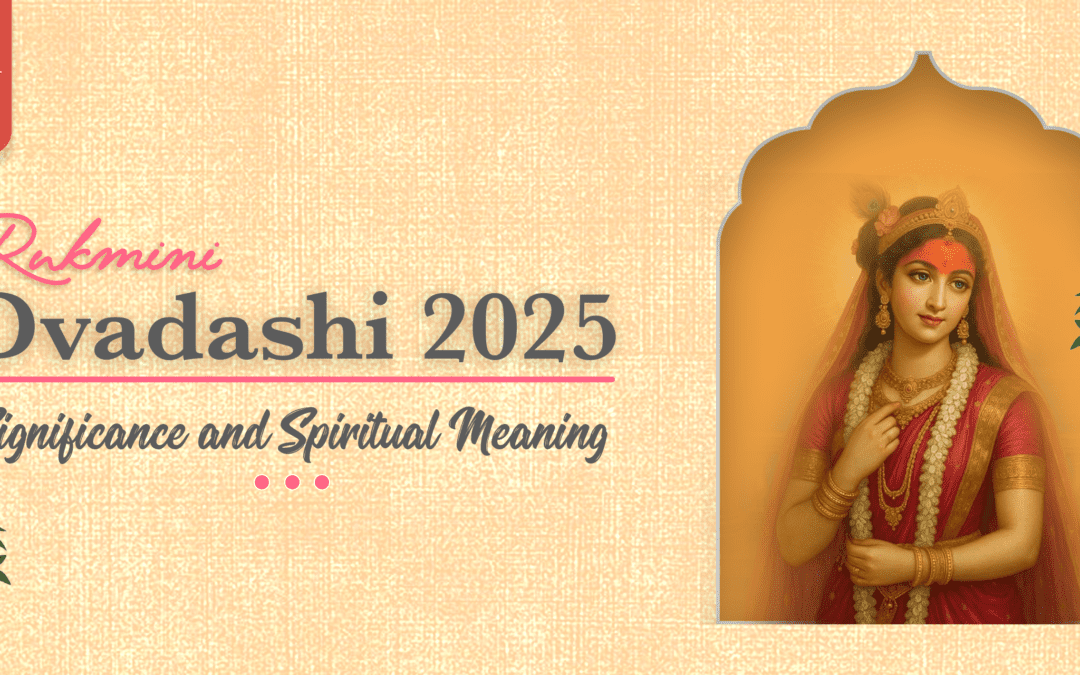
Hare Krishna, best wishes to all of you on Rukmini Dvadashi.

When Lord Shri Krishna is in His majestic form, he is called Dwarkadhish and Rukmini Devi is in the form of His internal potency. The appearance of that Rukmini Devi is celebrated as Rukmini Dvadashi in the Shukla Paksha of Vaishakh month. Rukmini Devi’s father was King Bhishmak of Vidarbha and her mother’s name was Sudhimati.

Though the Lord has many divine and sweet Leelas, but one of his divine Leelas is the episode of His marriage with Rukmini Devi, which has many teachings for us. Many saints and sages used to come to Maharaj Bhishmak’s court and narrate the stories and leelas of the Lord, which Rukmini Devi used to listen to from behind the curtain. She had never seen Shri Krishna directly. But she used to listen to Shri Krishna’s character with full concentration. If we also start listening about the Lord, then we can deliver our lives.

Thus, just by hearing this, Rukmini Devi decided to marry God, if not in this life then in the next life, but if I marry, then only Krishna. In this way, we should also make only Krishna the goal of our life. When the goal of our life is only Krishna, then he definitely comes and we do not need to doubt this. Further, Rukmini Devi wanted to surrender to God, but her elder brother Rukmi wanted to marry her to Shishupal due to his hatred for Krishna. So what should Rukmini Devi do, whom should she tell, then she wrote a letter to Shri Krishna. She gave it to a Brahmin and requested him to introduce Krishna to her.

What did Devi Rukmini write about Shri Krishna in her letter?

It was written in the letter that O Tribhuvan Sundar, your divine qualities enter the heart of all the listeners through their ears and quench the heat, sorrow, grief, pain of many births and the living beings who see Your divine beauty get full benefit i.e. the fruits of all the four Purusharthas. By hearing about You, my mind is leaving all shame and shyness and entering You. Thus, after telling the whole situation, Rukmini Devi requested Krishna to come and take her.

This teaches us that when we listen to the pastimes of God and his qualities with attention and intensity, then we should take shelter in the devotees of God and resolve all the doubts of our heart from them, as Rukmini Devi did. When Lord Shri Krishna heard Rukmini Devi’s letter from the Brahmin, He said that I will kill all the kings and bring Rukmini. In one night, Lord reached Vidarbha directly from Dwarka. When Sri Krishna met Rukmini Devi, he held her hand, made her sit in the chariot and he himself began to fight.

In this way Lord Sri Krishna conquered all the kings and brought Vidarbha princess Rukmini to Dwarka and married her according to the rituals. If there is such a strong desire to attain God in human life, then God is certainly found and the loving devotion of God begins by hearing about Him. So on this Rukmini Dvadashi, let us take shelter of Mother Rukmini Devi with all our heart and pray to her to attain God’s devotion and His love.

“Hare Krishna Hare Krishna Krishna Krishna Hare Hare”

“Hare Rama Hare Rama Rama Rama Hare Hare”

Your Smallest act of Charity can make a difference and bring smiles to Needy Faces.

Maha Shivratri

Maha Shivratri

The Significance of Maha shivratri

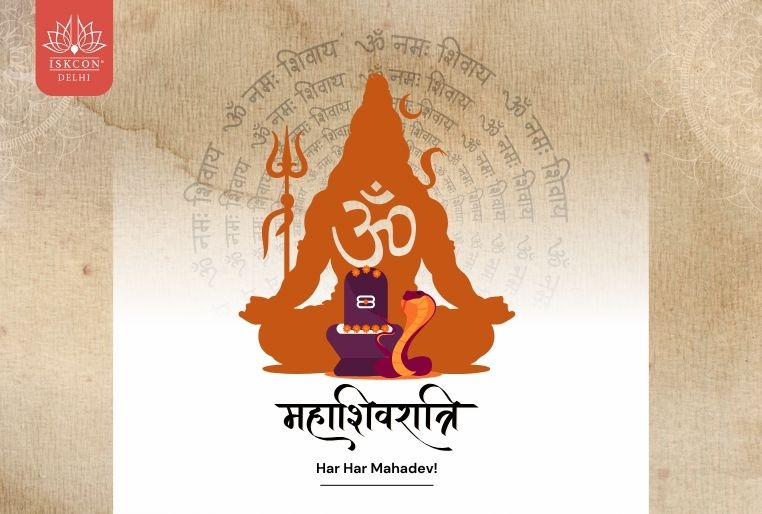
Hare Krishna! Heartiest wishes to all of you on the occasion of Mahashivratri festival. The Chaturdashi of the Krishna Paksha of every month is called Shivratri. But the Shivratri falling on the Krishna Chaturdashi of the month of Phalgun is called Mahashivratri, which is celebrated with great joy and devotion. At the time of doomsday, on this day at the time of Pradosh, Lord Shiva performs Tandava and burns the universe with the flame of his third eye. That is why it is also called Mahashivratri or Jalratri. Lord Shankar was also married on this day. That is why Bhole Bhandari’s wedding procession is taken out at night, and fruits are eaten after worshipping.

Lord Shiva as the Controller of the Universe

Shiva means auspicious or benevolent. Adidev, who is also called by the names Shankar, Shambhu, Mahadev, Mahesh, Rudra, etc., is also the controller of this material world. According to Brahma Samhita,

 kṣīraṁ yathā dadhi vikāra-viśeṣa-yogā
sañjāyate na hi tataḥ pṛthag asti hetoḥ
yaḥ śambhutām api tathā samupaiti kāryād
govindam ādi-puruṣaṁ tam ahaṁ bhajāmii

Lord Brahma tells that just as curd is produced from milk but it is a distorted form of milk, in the same way Lord Shiva also helps in the operation of the universe along with Brahma and Vishnu as the controller of this material world.

The Role of Lord Shiva, Vishnu, and Brahma in the Universe

Elsewhere it is described that Brahma, Vishnu, Mahesh run the system of this material universe through Rajo, Sattva, and Tamo Gunas. Vishnu and Mahesh are beyond Gunas, and the creation and destruction of this world take place under their authority. In this context, they have also been called Gunavatar. Many times the wrong notion is spread that Shivji is affected by Tamo Guna, but this is not so at all. Lord Shiv is beyond Gunas and he is the presiding deity of Tamo Guna in this world. Ghosts, spirits, vampires, demons, etc. are his followers under Tamo Guna.

Lord Shiva and Lord Vishnu: No Difference

In the Mahabharata’s Anushasana Parva, one meaning of the names Shiv, Rudrasthanu, and Rudra in the Sahastranaam of Vishnu is that there is no difference between the two. Thus, in many scriptures, we find that there is no difference between Lord Vishnu and Lord Shiva, but in a more in-depth study, we will find that there is a difference. Sri Chaitanya Mahaprabhu had called it Achintyabhedabheda Tattva.

Lord Shiva’s Role as the Best Among Vaishnavas

Now, how is there a difference? Srimad Bhagwatam describes in the twelfth chapter that this Shrimad Bhagwatam is the essence of all the Vedas, and in the essence of the same Vedas, Bhagwatam, it is described that the best among Vaishnavas is Shambhu. Vaishnavnam Yatha Shambhu. In the fourth chapter of Shrimad Bhagwatam, Lord Shiva describes Rudrageet and says that whoever recites this hymn, it becomes easy for him to get the devotion of Lord Shri Krishna. Devotees of Rudra sect, one of the Vaishnav traditions, follow the path of Krishna bhakti given by Lord Shiva, and the Acharya of this tradition is Shri Vishnu Swami ji.

Lord Shiva’s Devotion to Lord Ram and His Preaching

In Padma Purana, Lord Shiva preaches to his wife Parvati,

śrī rāma rāma rāmeti rame rāme manorame
sahasranāma tat tulyaṃ rāmanāma varānane

That is, O Rama, O Sumukhi, the name of Ram is like Vishnu Sahastra Naam. I always praise Ram and enjoy the name of Ram. Thus, by deep study of scriptures, we find that there is no difference between Lord Shiva and Vishnu, and Shiva considers Lord Vishnu as his worshipable deity.

Lord Shiva’s Exchange with Lord Vishnu: The Mohini Leela

In the eighth chapter, when Lord Shiva requested to see the Mohini avatar of Lord Vishnu, Vishnu Ji gave him the darshan of Mohini form, but what happened was that Vishnu Ji confused Shiva Ji by creating attraction towards Mohini through his Maya. This leela is an exchange between two great personalities, but some immature people feel that this is a competition of superiority between Shiva and Vishnu Ji.

Lord Shiva in the Raas Leela of Lord Krishna

Lord Shiva, eager to participate in the Raas Leela of Lord Shri Krishna, took the form of a Gopi and even today we can see that in Shridham Vrindavan, he is worshipped as Gopeshwar Mahadev, where he is adorned as a Gopi. Lord Shiva protects every Dham as the Kshetrapalak. In Mathura, he is in the form of Bhuteshwar Mahadev. In Manasi Ganga Govardhan, he resides in the form of Chakleshvar Mahadev. In Nandgaon, he is in the form of Nandeshwar Mahadev, in Kamyavan, in the form of Kameshwar Mahadev and Gopeshwar Mahadev Ji is the Digpal of Shri Dham Vrindavan.

The Importance of Gopeshwar Mahadev

Shridham Vrindavan is a major place for Gaudiya Vaishnavas, and in many Gaudiya Vaishnava texts, Gopeshwar Mahadev situated in Vrindavan has been praised by our previous acharyas. Shrila Narhari Chakravarti writes in Bhakti Ratnakar Granth that, “I bow down to Gopeshwar Mahadev who removes all the troubles that come in devotion and makes the love of God accessible in Vrindavan.”

Lord Shiva’s Meeting with Baby Krishna

When Lord Shiva came to know that Lord Shri Krishna has taken birth as a child in Gokul, he expressed his desire to meet Krishna and asked for permission from mother Parvati to go to Nandgaon, and he reached there to meet him in his Aghora disguise. And when Yashoda saw that an Aghori Baba has come to meet Krishna, thinking that Krishna might get scared of his appearance, Yashoda Maiya refused to meet him. Baba insisted on not going without meeting him and went some distance and sat there.

Lord Shiva as Nandeshwar: A Symbol of Devotion

Here Lord was also eager to give darshan to Shiva, so he also started crying and cried in such a way that he could not stop even after someone tried to pacify him. If not, then someone suggested that maybe it is a bad omen because of not allowing Baba to meet Kanha and Kanha is crying, then Lord Shiva was called and as soon as Lord Shiva touched Kanha, he became calm. Then Yashoda Maiya requested Shiv Ji that our Kanha does not cry because of your coming here, so you stay here. From then on, Lord Shiva became Nandeshwar.

Conclusion: Praying for Lord Shiva’s Blessings

This wonderful leela shows us that only the eagerness of the devotee of Lord to meet him can make him have his darshan. It is said that without the permission of Lord Shiva, no one is allowed to enter the abode. Therefore, we all should also pray to Lord Shiva to please remove the desire to enjoy the material world from our hearts and remove all the obstacles in doing devotion to Lord Shri Krishna with complete dedication, so that we can get out of this cycle of life and death and attain Bhagavat Dham at the end of life. Hare Krishna!

Donate to support us
The Glorious Life and Legacy of Srila Isvara Puri

The Glorious Life and Legacy of Srila Isvara Puri

Birth and Early Life in Kumarhatta

The Holy Birthplace of Srila Isvara Puri

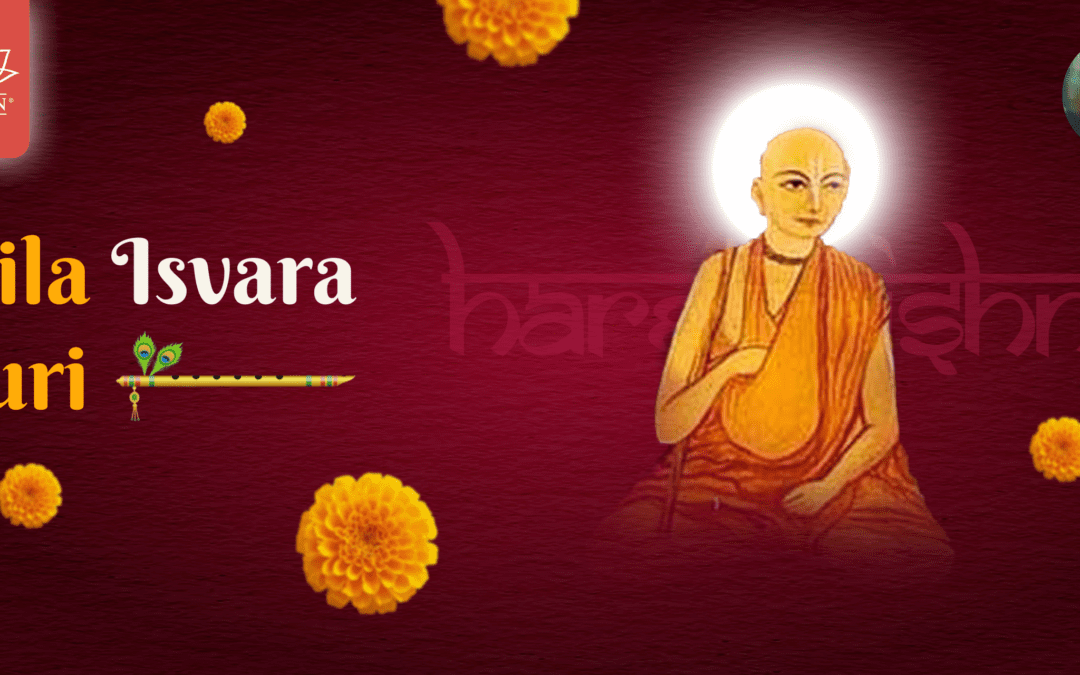
Srila Isvara Puri was born in the town of Kumarhatta on the full moon day of the month of Jyestha to a family of brahmins. The town holds great significance for Gaudiya Vaishnavas because Shrivas Pandit and his brothers moved here after Mahaprabhu took sannyas, unable to tolerate the painful reminders of Him in Navadvipa.

Kumarhatta’s Significance for Gaudiya Vaishnavism

Isvara Puri’s birthplace is popularly known by the name of “Chaitanya Doba,” meaning “a pool of water.” When Chaitanya Mahaprabhu passed through Kumarhatta on His way to Puri, He picked up some earth from the place of His spiritual master’s birth, wrapped it in His cloth, and took it with Him. This act was followed by thousands of pilgrims, creating a pit that later filled with water.

Initiation and Spiritual Mastery

Taking Shelter under Madhavendra Puri

Isvara Puri’s sannyasa name is widely known, though his name prior to taking sannyasa is not recorded. His father’s name was Shyamasundar Acharya. Ishwara Puri took initiation from Madhavendra Puri, the embodiment of nectarean devotional love. Madhavendra Puri was also the spiritual master of Nityananda Prabhu.

The Power of Guru-Disciple Relationship

Madhavendra Puri was very pleased with Isvara Puri’s sincere, affectionate service, showering him with blessings that immersed him in the ocean of love for Krishna. The relationship between Guru and disciple is key in spiritual progress. By pleasing the spiritual master, a disciple attains auspiciousness, but the reverse leads to inauspiciousness. The guru is eternal, and our relationship with him is also eternal. So, we must always try to please the spiritual master.

Chaitanya Mahaprabhu’s Connection with Isvara Puri

This is the famous connection between Isvara Puri and Chaitanya Mahaprabhu—Mahaprabhu took initiation from him. While Mahaprabhu is the Supreme Personality of Godhead and doesn’t need initiation, He set an example for the world by teaching the necessity of sheltering under a bonafide spiritual master.

The Divine Meeting of Mahaprabhu and Isvara Puri

Mahaprabhu traveled to Gaya for a specific purpose—His father had left this world, and He went there to perform the final oblations. It was there that He met Isvara Puri and took initiation from him. Afterward, He began displaying signs of love for God and engaged in divine pastimes upon returning to His homeland.

The Importance of Guru and the Initiation of Mahaprabhu

When Mahaprabhu and Isvara Puri met, they were overcome with ecstasy, drenched in tears of prema. Mahaprabhu expressed, “My pilgrimage to Gaya is successful today because I have seen your lotus feet.” He offered His body to the service of the Guru and requested to drink the nectar of Krishna’s lotus feet. This highlights the supreme importance of the guru in spiritual progress.

Isvara Puri’s Impact on Mahaprabhu’s Life

A Guru’s Blessings and Divine Love

Mahaprabhu’s pilgrimage was marked by His personal service to Isvara Puri. After performing oblations for His father, He returned to His room to cook, personally preparing food for His spiritual master. Mahaprabhu’s act of cooking and serving demonstrates the ideal way to serve the Guru.

Mahaprabhu’s Service to His Guru

Isvara Puri had met Mahaprabhu earlier in Navadvipa, even before giving Him the ten-syllable mantra in Gaya. He also met Advaita Acharya, who had similarly been a disciple of Madhavendra Puri.

Devotional Service and Guru’s Mercy

Mahaprabhu’s Demonstration of Guru Seva

Isvara Puri came to Navadvipa and stayed at Gopinatha Acharya’s house. At that time, Nimai Pandit was absorbed in His studies. He met Isvara Puri in disguise, and no one initially recognized him. However, the divine lustre of a Vaishnava cannot remain hidden from another, and Advaita Acharya eventually recognized Ishwara Puri as Madhavendra Puri’s dear disciple.

The Blessings of Isvara Puri in Navadvipa

The First Meeting with Nimai Pandit

One day, when Mahaprabhu was returning from school, He met Isvara Puri on the way. Isvara Puri was struck by His demeanor and felt a deep affection for Him. Upon learning that Mahaprabhu was Nimai Pandit, Isvara Puri was delighted and humbly accepted an invitation to lunch.

Ishwara Puri’s divine presence was soon recognized by the devotees, and a loud chant of “Hari! Hari!” echoed throughout. This moment marked the recognition of Isvara Puri’s true identity as a spiritual master.

Srila Isvara Puri’s Disappearance

Srila Isvara Puri’s disappearance is a day of deep reflection for devotees. His life was a testament to pure devotion and surrender to Lord Krishna, and his teachings left an indelible mark on the Bhakti movement. As the spiritual master of Chaitanya Mahaprabhu, his legacy continues to inspire countless souls on the path of devotion. On this day, we honor his transcendental contributions and pray to follow in his footsteps, seeking the mercy of the guru and the divine grace of Lord Krishna.

The Importance of Serving the Guru for Spiritual Progress

The life of Srila Ishwara Puri teaches us that Guru-seva is essential to attain love of Godhead. As Mahaprabhu Himself showed, serving the guru leads to the fulfillment of all spiritual desires.

“Srila Isvara Puripada Ki Jai!”

Your Smallest act of Charity can make a difference and bring smiles to Needy Faces.